|
Our lab had the opportunity to share our work on using black soldier fly (BSF) larvae as a sustainable approach to food waste management at SIWW 2026.
Our booth highlighted how food waste collected from canteens and households can be repurposed as a food source for black soldier fly larvae. By converting food waste into insect biomass, BSF larvae offer a promising approach to reducing the amount of organic waste sent for disposal while creating a valuable resource. The larvae can subsequently be processed and used as a protein-rich ingredient for animal and poultry feed, contributing to a more circular approach to food and resource management. It was a great opportunity to to connect with researchers, industry partners, and professionals, exchange ideas. Thank you to everyone who visited our presentation and engaged with us during the event. We look forward to continuing our work towards innovative and sustainable approaches to food waste management!
0 Comments
One of the more rewarding aspects of scientific communication is engaging young minds and inspiring future scientists. Dr. Nalini has always been passionate about doing outreach activities and she visited Hwa Chong Institution for the fourth year in a row. She shared the lab's work on studying insect reproduction to understand biodiversity and how we can engage insects for sustainable solutions. This year, she was also able to share how HCI seniors actually ended up as interns in the Reprolab and encouraged students to explore their interests in research early.
Today, sadly, marks the end of the Species On The Move (SOTM) 2026 Conference. We had a fun 5 days making new friends and nourishing our minds from experts in the field. We ended the entire conference in a bang, with a banquet-style dinner and a interactive cultural performance from one of the indigenous tribes from Taiwan. Our dear Year 3 undergraduate student, Leo, managed to clinch the best poster award for this conference! (Note: This is his very first conference!) We look forward to more quality work Leo. Please stay tuned to this space for updates to read up about what he had presented in this conference! Once again, congrats Leo! We are also excited to see Janine from Prof. Eunice's lab had also won an award as well for her category! So happy to see two of NUS's students on stage for this conference! Written by Xun Liang
As part of Species On The Move (SOTM) Conference 2026, our Reprolab members split into 2 mini-expeditions as provided by the amazing SOTM organizers. Leo and Xun Liang, together with Dr Nalini, took off to Yushan National Park to chase Taiwan’s high-elevation wildflowers and getting a crash course in alpine ecology (thin air, big views, tiny plants with serious resilience) while enjoying the cold, mountainous air. In the meantime, our lab's tea lover, Tyrone, took a deep dive into Taiwan's tea culture as he let the connected landscapes, local heritage, and indigenous community knowledge seep in one story (and cup) at a time.
Today, the Reprolab contingent presented their posters at the Species on the Move conference! All of us engaged enthusiastically with the members of the conference. In case you missed it, here is a quick summary of our posters! Prof Nalini presented on behalf of Shakthee's and the lab's work on the evolution of BSFs under domesticated conditions. Together, our findings reveal that genomic drift, targeted selection, and microbial plasticity operate concurrently during insect domestication, suggesting how domestication can rapidly generate evolutionary novelty, especially in captive environments. Tyrone presented on how Singapore’s heterogenous cityscape of residential zones and industrial estates interspersed amidst forest fragments, influences gene flow in wild mosquito populations, showing evidence of limited gene flow among urban clusters and consistent with repeated population bottlenecks from insecticide pressure and Wolbachia interventions. His work showed that the heterogeneity of cities and population control can shape the dynamics and adaptive potential of invasive species such as Ae. aegypti. Mosquito RA Xun Liang shared about the intriguing process of satyrization between Ae. aegypti and Ae. albopictus. Here, he showed that Ae. albopictus males were more aggressive in mating interactions, and the effects of satyrization almost completely absent in Ae. aegypti females (surprisingly). These findings highlight how behavioural and reproductive mechanisms can facilitate mosquito distribution and disease transmission risks as these invasive vectors move into new environments. Lastly, Leo tackled the problem of species concepts themselves by utilising an integrative approach to delimit the species boundaries of Sepsis punctum. He first showed through morphometric analyses that North American and European populations were phenetically divergent in some traits but not others, and that incomplete barriers of reproductive isolation were present between these populations. Together, these lines of evidence shows the importance of using integrative approaches to uncover hidden evolutionary divergence in widespread taxa. Congratulations everyone and enjoy the rest of the conference!
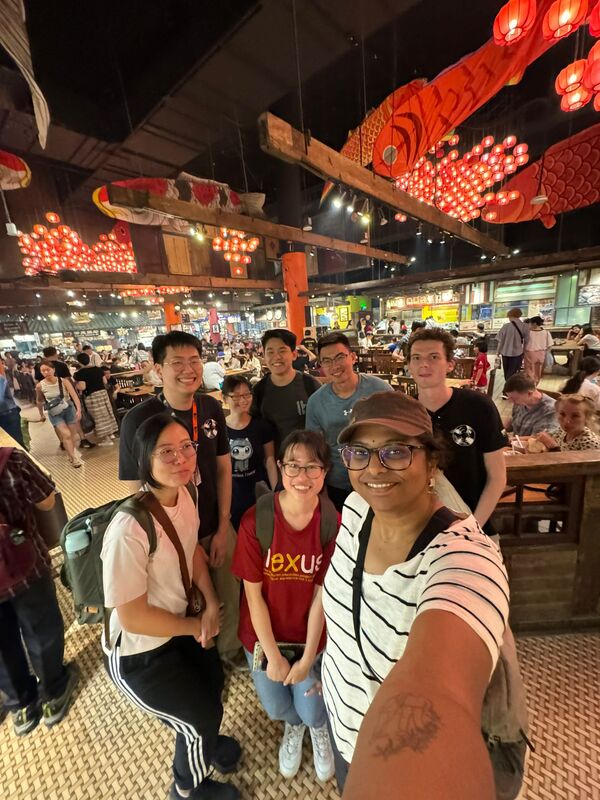
Written by Leo Apart from gaining different insights from the wonderful talks and posters during the Species On The Move (SOTM) 2026 Conference, one of the best parts of the conference happened outside the conference: shared dinners in Taiwan, bus-seat conversations, and the kind of spontaneous chats that turn into real connections. Grateful for new (and old) friends, fresh ideas, and the community that makes the work feel bigger than any one lab. Today was a nerve-wrecking experience for most of us, especially for Dr. P. She gave a talk linking theoretical concepts she had worked on, like sexual selection driving species divergence, to sustainability. She presented in front of the tenure committee as well as the entire DBS staff and aced her presentation with flying colours (to us at least)! Fingers crossed for her tenure.
In July 2025, we were awarded bilateral grant funded by New Zealand's Ministry of Business, Innovation and Economy as well as Singapore's A*STAR. This joint research project aims to develop a scalable black soldier fly larvae (BSFL) biorefinery that converts organic waste into higher-value products.
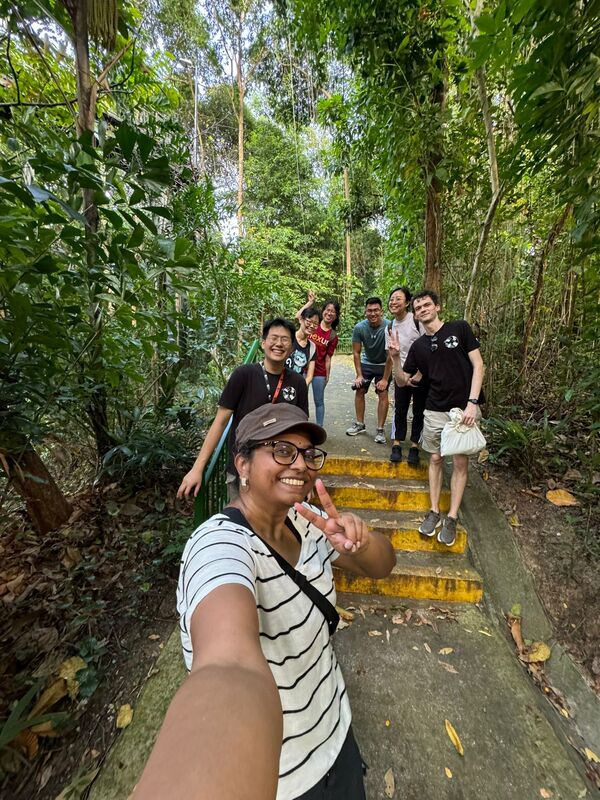
After months of online meetings, we hosted the first in-person NZ-SG workshop at NUS from 23-27 February this year. The workshop included technical sessions on husbandry, feedstocks, pre-treatment, metabolomics, consumer insights, and commercialisation, as well as facility visits in NUS, A*STAR-SIFBI, Protenga and Insectta. We also made it a point to introduce our visitors to various cuisines as well as nature hikes along the Southern Ridges. Overall, it was an enriching research and networking experience for all. We had an absolutely fantastic night filled with pizza 🍕, laughter, and epic board game battles with our lab members! From uncovering secrets and sabotaging plans to hunting for Gold in Saboteur, and cracking codes in Decrypto, the night was full of energy.
We are delighted to share that our Prof., Dr Nalini Puniamoorthy, has been awarded the Faculty Teaching Excellence Award 2026 by the Department of Biological Sciences.
Here’s to many more years of nurturing the next generation of scientists — congratulations, Prof! 🎉👏 |
Categories
All
Lab NewsHCI outreach session Archives
May 2026
Categories
All
|


RSS Feed